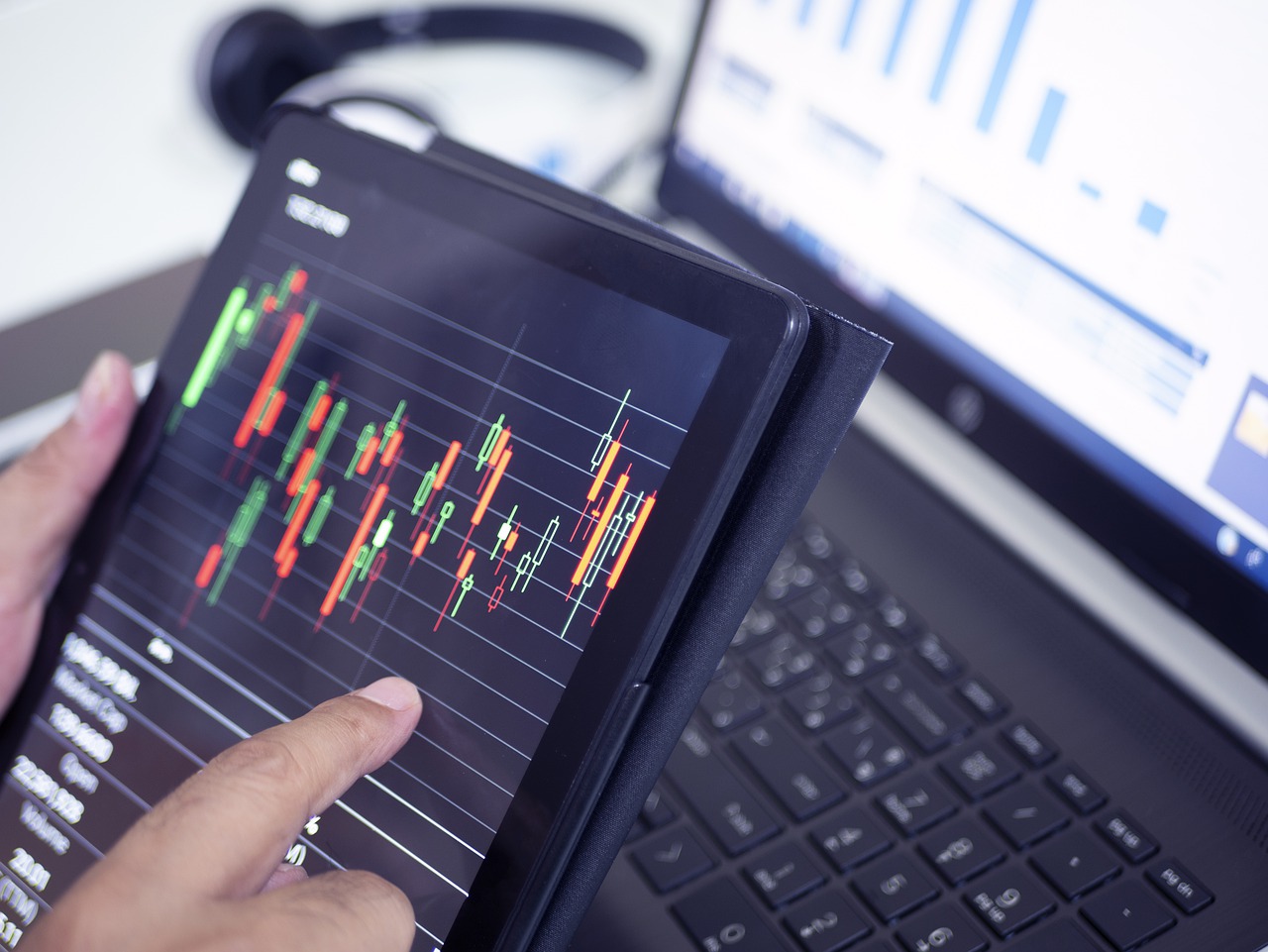
In financial trading, relying on gut feelings, subjective hunches, or unverified market tips is one of the quickest paths to capital depletion. Whether you trade stocks, foreign exchange, commodities, or cryptocurrencies, success requires a systematic approach grounded in verifiable data. Before risking real money in live market conditions, traders must answer a fundamental question: Has this setup historically generated a statistical advantage over time?
Backtesting is the practice of evaluating a trading hypothesis or system against historical market data to see how it would have performed in the past. By simulating trade entries, exit criteria, stop loss levels, and profit targets across previous price cycles, backtesting provides quantitative proof of a strategy viability. When conducted correctly, backtesting isolates effective trading methodologies from poor ones, quantifies downside risk, builds trader confidence, and helps eliminate emotional bias from execution.
The Core Objectives of Backtesting
Backtesting serves broader purposes than simply determining whether a trading system yields a profit. A comprehensive backtest provides a deep structural audit of a trading strategy under diverse market conditions.
First, backtesting measures overall statistical expectancy. Expectancy defines the average dollar amount or percentage return you can expect to win or lose per trade over a large sample size. A positive expectancy proves that the combination of your win rate and reward-to-risk ratio creates a sustainable long-term edge.
Second, it reveals maximum drawdown characteristics. Drawdown measures the peak-to-trough decline in your trading account equity during a losing streak. Knowing the maximum historical drawdown helps you plan proper position sizing, prepare psychologically for equity dips, and establish risk parameters that prevent catastrophic capital loss.
Third, backtesting exposes how your trading strategy handles changing market regimes. Markets move through distinct phases, including strong bull trends, aggressive bear sell-offs, tight consolidation ranges, and periods of high volatility. Testing across multiple years ensures your strategy can withstand shifting economic climates rather than flourishing during one specific market environment and failing in others.
Essential Steps to Backtest a Trading Strategy
Conducting a thorough backtest requires a structured, step-by-step approach. Skimping on preparation or using vague rules compromises the integrity of your test results.
Step 1: Define Precise, Unambiguous Trading Rules
Before opening historical charts or writing code, you must establish exact criteria for every phase of a trade. A valid backtest leaves zero room for subjective interpretation during execution.
-
Market Selection and Timeframe: Specify the exact asset classes, individual tickers, and chart timeframes you intend to test, such as daily candles on major stock indexes or fifteen-minute bars on currency pairs.
-
Entry Triggers: Define the precise technical or fundamental conditions required to open a long or short position, such as a moving average crossover combined with specific indicator readings or price pattern breakouts.
-
Exit Rules: Establish clear profit targets and trailing exit signals that mandate when to lock in gains and close open positions.
-
Risk Parameters: Set initial stop loss levels for every entry, whether based on a fixed percentage, technical support levels, or volatility indicators like the Average True Range.
-
Position Sizing: Define how much capital is allocated per trade, such as risking a fixed one percent or two percent of total portfolio equity on any single position.
Step 2: Choose Between Manual and Automated Backtesting
Traders generally use two primary backtesting methodologies depending on their technical skillset, time availability, and trading style.
Manual backtesting, often called bar-by-bar manual testing, involves scrolling back through historical price charts and stepping forward bar by bar to identify setups manually. You record entry price, exit price, stop loss, profit target, and net trade result into a dedicated spreadsheet. Manual testing is ideal for discretionary traders, price action traders, and beginners because it deepens chart reading skills and fosters a intuitive feel for market flow. However, manual testing is time-consuming and prone to human observation errors.
Automated backtesting uses software platforms and programming languages to program trading rules into algorithmic scripts. The computer processes thousands of historical price candles in seconds, generating complete performance metrics instantly. Automated testing eliminates execution speed constraints, processes decades of multi-asset data, and eliminates human reporting bias. However, automated testing requires programming skills and carries a higher risk of data errors and algorithmic overfitting.
Step 3: Select Quality Historical Market Data
The accuracy of your backtest depends entirely on the quality of your historical dataset. Poor or incomplete price data produces misleading test metrics that ruin live trading accounts.
Ensure your historical data source includes accurate open, high, low, and close prices along with volume metrics. For intraday strategies, ensure bid-ask spread data and tick-level granularity are included. Furthermore, adjust stock datasets for corporate actions such as stock splits, reverse splits, and dividend distributions to avoid artificial price jumps on historical charts.
Step 4: Execute the Test and Log Detailed Performance Data
Run your strategy across a representative historical sample size. For daily chart swing trading strategies, aim for a minimum sample of one hundred to two hundred consecutive historical trades spanning several years. For high-frequency intraday strategies, aim for several thousand trades across varied market volatility conditions.
For every trade executed during the test, record essential transaction metrics:
-
Date and Time of Entry and Exit
-
Trade Direction: Long or short position
-
Entry Price and Executed Exit Price
-
Stop Loss and Profit Target Distances
-
Net Profit or Loss in Currency and Percentage
-
Duration of Trade: Holding time measured in bars or days
Step 5: Analyze Critical Performance Metrics
Once you complete the historical simulation, aggregate your raw trade data to evaluate performance metrics. Focus on key summary indicators rather than looking solely at total net profit.
-
Win Rate: The percentage of total trades that closed with a profit.
-
Average Win vs Average Loss: The ratio of average gain on winning trades compared to average loss on losing trades.
-
Profit Factor: The gross profits divided by gross losses. A profit factor above 1.5 indicates a robust strategy, while a profit factor below 1.0 reflects a losing system.
-
Maximum Drawdown: The largest single peak-to-trough drop in account equity expressed as a percentage.
-
Sharpe Ratio: A risk-adjusted return metric that measures excess return relative to total strategy volatility.
Critical Pitfalls to Avoid in Backtesting
Many traders achieve outstanding profits during backtesting only to suffer severe losses when deploying the strategy with live capital. This discrepancy usually stems from common backtesting biases and procedural errors.
Curve Fitting and Over-Optimization
Over-optimization occurs when a trader excessively tweaks strategy parameters to make historical performance look flawless on a specific dataset. Adding complex filters, fine-tuning indicator settings to hyper-specific values, or adjusting exit points to eliminate individual past losses creates a system fitted strictly to past noise rather than genuine market mechanics. Over-optimized strategies almost always fail when exposed to new, unseen price action.
Ignoring Transaction Costs and Slippage
Failing to account for real-world trading friction is a leading cause of backtest distortion. Every live trade incurs execution costs, including broker commissions, exchange fees, financing rates for overnight positions, and bid-ask spreads.
Additionally, slippage occurs when trades execute at a less favorable price than intended due to order latency or limited order book liquidity during fast markets. Incorporating realistic commission structures and slippage buffers into your backtesting model prevents artificial profit inflation.
Look-Ahead Bias
Look-ahead bias occurs when a backtesting algorithm or manual tester inadvertently uses future information that was not available at the exact moment a trade decision was made. For instance, executing an entry based on the daily high or close price before the daily candle has officially closed introduces look-ahead bias. Always ensure signal generation relies strictly on completed price bars.
Survivorship Bias
Survivorship bias happens when backtesting stock trading strategies on a current list of index constituents while ignoring companies that went bankrupt, were delisted, or were acquired during the test period. Testing strictly on surviving, successful companies artificially inflates strategy performance by omitting historical corporate failures.
Transitioning from Backtesting to Live Execution
Passing a rigorous backtest is an encouraging milestone, but it represents the beginning of strategy validation rather than the final step. Before committing significant capital, follow a disciplined deployment protocol.
Forward Testing and Paper Trading
After completing historical backtesting, transition your strategy to forward testing in real-time market conditions using a demo trading account or paper trading software. Forward testing validates how the strategy performs against live market execution speed, real-time data feeds, and emotional pressure without risking real capital. Run forward tests for at least one to three months to verify that live results align with backtested expectations.
Micro-Lot Live Deployment
When moving to live execution, start with fractional position sizes or micro-lots. Trading with small real capital helps you manage the psychological transition from simulation to real risk while verifying that your broker order routing, commissions, and execution speeds match your backtesting models. Scale up position sizes gradually as performance metrics demonstrate consistency over expanded live trade samples.
Frequently Asked Questions
What is the minimum historical sample size required for a valid backtest?
A valid backtest requires a statistically meaningful sample size to ensure results reflect a true edge rather than random luck. For swing trading or daily chart strategies, a minimum of 100 to 200 trades across at least three to five years of market data is recommended. For high-frequency intraday strategies, aim for a sample size of at least 500 to 1,000 trades covering varying volatility periods.
What is the difference between backtesting and walk-forward optimization?
Backtesting evaluates a strategy on a static block of historical data to assess past performance. Walk-forward optimization is an advanced technique that divides historical data into alternating in-sample training periods and out-of-sample testing periods. The strategy parameters are optimized on the in-sample data and immediately tested on unseen out-of-sample data, shifting forward chronologically to simulate real-world adaptation to changing markets.
Can price action strategies without technical indicators be backtested effectively?
Yes, price action strategies based on chart patterns, candlestick formations, support and resistance levels, and market structure can be backtested effectively. Manual bar-by-bar testing works particularly well for price action systems. The key is establishing rigid, objective rules for what constitutes a valid pattern or structural breakout so that setups are identified consistently without hindsight bias.
How do dividend payments and corporate actions affect backtesting accuracy for stock strategies?
Unadjusted stock price charts create artificial price gaps when dividends are distributed or stock splits occur, which distorts technical indicators and historical performance calculations. To ensure accuracy, backtesting stock strategies must utilize total return price series or split-adjusted and dividend-adjusted price data, which correctly account for cash distributions and share restructuring.
Why do backtesting results often differ significantly from live demo account results?
Discrepancies between backtested results and live demo results usually stem from unmodeled execution realities. Real-time market conditions involve dynamic bid-ask spread expansion, order queue delays, partial fills, and slippage during volatile news events that historical end-of-day or bar data may not capture. Forward testing on live data feeds helps bridge this gap.
What software tools and programming languages are commonly used for backtesting?
Traders use various platforms based on their technical proficiency. Discretionary and visual traders frequently use charting software with built-in bar-replay functions. Algorithmic traders and quantitative researchers rely on dedicated backtesting platforms, specialized trading software, or general-purpose programming languages like Python and R paired with quantitative data analysis libraries.
How often should a trader re-backtest or update an existing strategy?
A trading strategy should be re-evaluated whenever live execution metrics deviate significantly from historical backtested expectations over a reasonable trade sample. Additionally, reviewing and running diagnostic backtests annually or after major macroeconomic shifts helps confirm that underlying market conditions have not degraded your statistical edge.